Q&A with Joseph Kosinski and Jerry Bruckheimer

Congratulations on this incredible film. I want to start with your producer credit. What does that role mean to you?
Celine Song: Being a producer can mean a lot of things. Sometimes it’s financial, but for me, it meant being in the creative trenches—casting, budgeting, locations, all of it.

Q&A with James Sweeney and Dylan O’Brien

I’m curious about your collaboration process. Did you have a chance to rehearse, or was it more about trading ideas before filming?
Dylan O’Brien: It went on for a while, actually. For years we were getting passed on by financiers, so in the meantime we kept checking in, updating each other, commiserating.

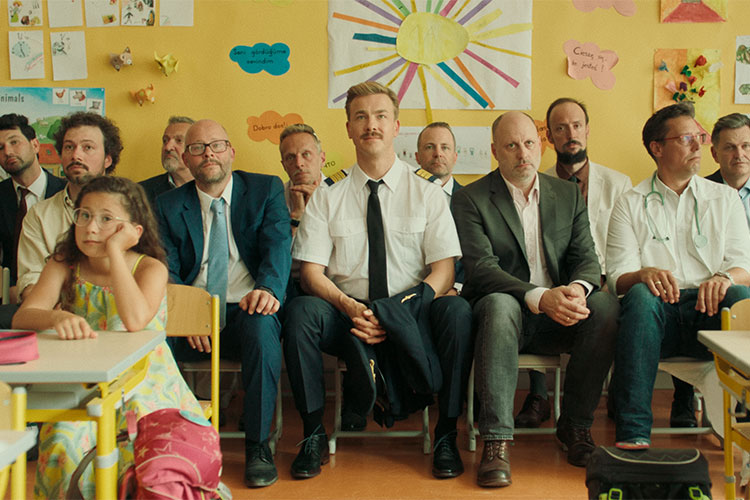
Q&A with Bernhard Wenger and Albrecht Schuch

Albrecht, you said rehearsal was the most challenging of your career. Why?
Albrecht Schuch: It was, without question, the hardest preparation I’ve ever faced. At first, I couldn’t find the center of the character. He felt like someone without emotions, almost as if he were absent from his own life.

Q&A with Austin Peters

Can you talk about the decision to set the film in 2013, and why that specific year was the right choice for this story?
Austin Peters: If you think about where we, as a country, were at in 2013… It was such a different time.

Q&A with Anna Boden, Ryan Fleck, and Jay Ellis

This is a movie that shows real love for the Bay Area. Where did the story come from?
Ryan Fleck: Well, it starts with that Too $hort song, this really nasty song called Freaky Tales that I heard way too young, maybe nine or ten. I grew up with hippie parents. We had Beatles records and Janis Joplin and then my friends played me Freaky Tales and I was like, What is going on?!